1886: Mersey Railway
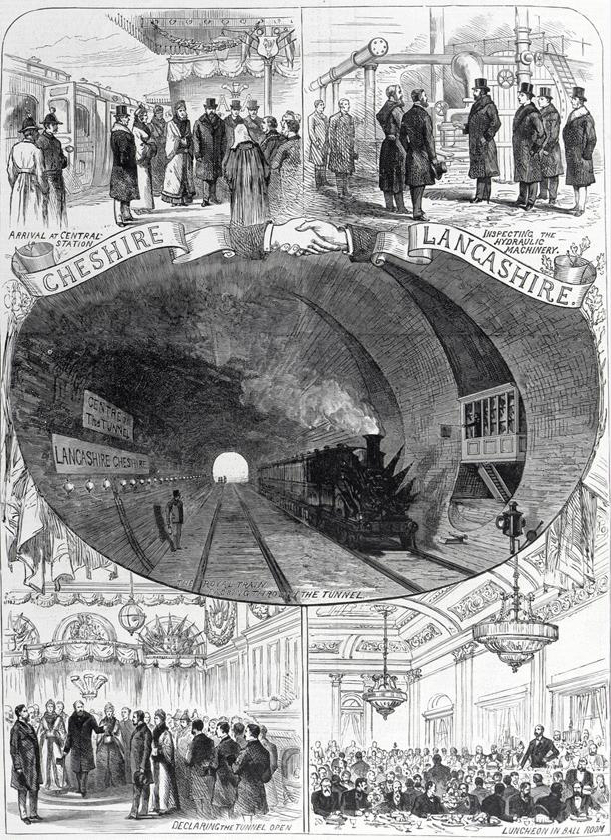
Opened in 1886, the Mersey Railway Tunnel was the first tunnel under the River Mersey, linking Liverpool James Street with Birkenhead Central. Subsequent extensions brought the line to Rock Ferry and Birkenhead Park on the Wirral, and a new low-level station at Liverpool Central.
The original trains were steam hauled, with the tank locomotives working hard to cope with 1 in 27 gradients in the tunnel. For the most part, the Mersey Railway was a strictly local operation, but for a brief period between 1898 and 1900, through services operated from Liverpool Central Low Level to North Wales, London Paddington and even Folkestone Harbour where a connection could be made to Paris! These trains were hauled by Mersey Railway locomotives as far as Rock Ferry, where a Great Western Railway engine took over.
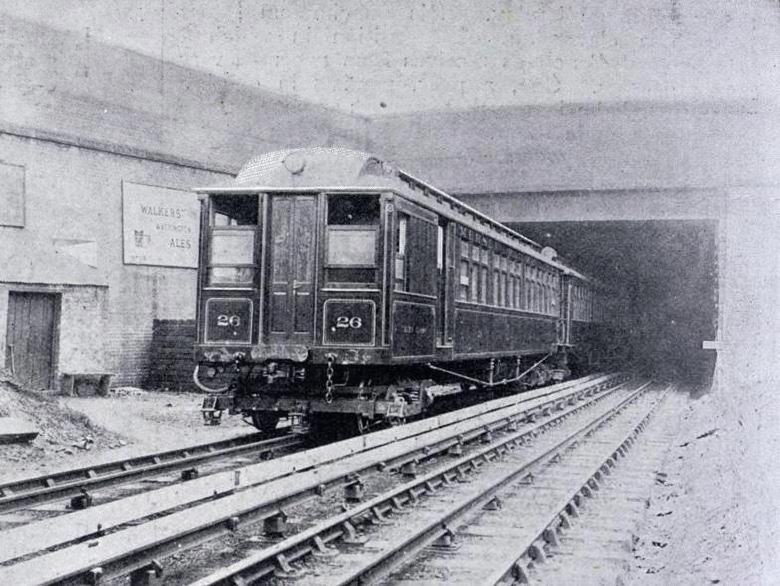
Ventilation in the stations proved inadequate, and passengers started to avoid the choking atmosphere in favour of the Mersey Ferries, causing revenues to plummet. The railway was saved from bankruptcy by the American entrepreneur George Westinghouse, who funded the conversion of the system to electric operation.
The electric service commenced in May 1903 and was an immediate success, becoming a vital part of the region's transport infrastructure. In 1938 the London Midland and Scottish Railway electrified its branches to West Kirby and New Brighton, and through running onto the Mersey Railway commenced, forming the basis of today’s Wirral Line service.
The Mersey Railway survived as an independent company until nationalised in 1948. The tunnel itself is still a vital link, used by Merseyrail trains carrying thousands of passengers daily.